An Introduction to
TUNING THEORY of PERSIAN DASTGAHI MUSIC
The View of Contemporaries, Consonant Intervals of Dastgahs
Written by Siavash Sahabi
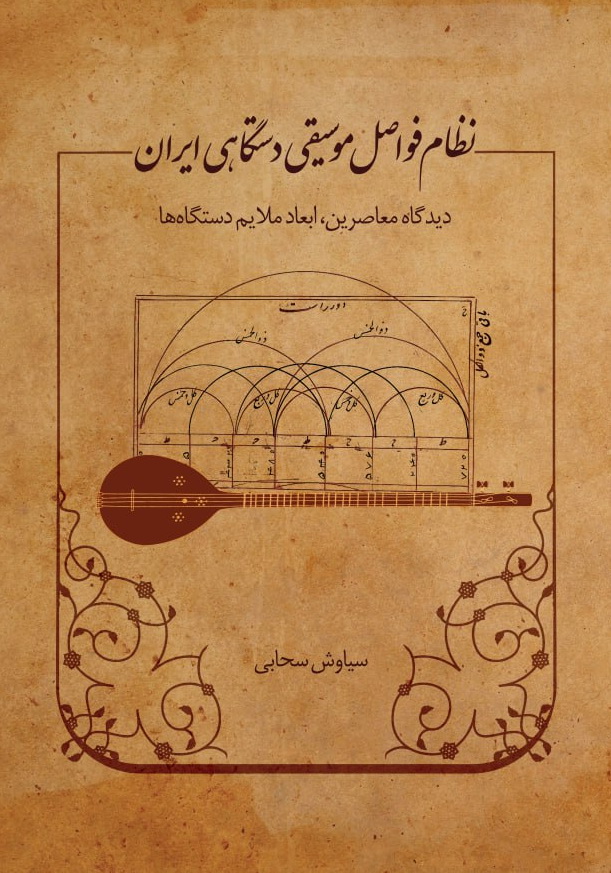
The structure of intervals in any musical culture is one of its most important theoretical and practical aspects. Neglecting this element can hinder the understanding of the structural and historical complexities of the music. Accordingly, it was deemed necessary to review the works of contemporary musicians and theorists regarding the intervals of Iranian traditional (Dastgāhi) music. Based on the study, their approaches can be categorized into three groups:
The first group proposed intervals based on personal opinion or common views of their time, without providing specific reasons or evidence. The second group attempted to measure intervals through various methods. The third group used rules derived either from acoustic science or from the historical background of Iranian music to calculate and define the intervals.
While proposals from the first group have historical and practical significance, they lack scientific and historical foundation and thus cannot be unconditionally accepted by musicians. In the second group, potential errors in experimental procedures, disregard for performance conditions during tests, and lack of convergence in results, along with other ambiguities, cast doubt on their findings. In this context, the author as the third group employed an analytical method based on one of the most important historical concepts in Iranian music -the notion of "Molāyemat" (consonant) and "Tanāfor" (dissonance)-using its numerical rules alongside acoustic principles, the structure of the Setar instrument, and necessary calculations to determine the precise intervals of each Dastgāh separately. Thus, his method may be regarded as ascientific-historical approach.
Alongside the main outcome -calculating and defining the values of the Dastgāhs intervals-important insights were gained on related topics such as the historical origins of the Dastgāhs and the Avaz-e Esfahan intervals, issues of nomenclature, intercultural connections with ancient Greek music, and more.
It is worth noting that a scientific approach to such matters can always remain open to critique and may logically evolve according to the technical and performance conditions of the music in question.
Siavash Sahabi
Fall 2025